
Invasive Weeds Awareness
Invasive weeds are more than an eyesore. They are non-native plants from other parts of the world that out-compete native North American vegetation, degrade the habitat of our wildlife, reduce property values, and in some cases pose direct risks to people and animals. Once established, many are extraordinarily difficult and expensive to eradicate.
The Utah Weed Control Association classifies noxious weeds by severity. Class 2 weeds are established enough to require suppression and containment, while Class 3 weeds are widespread and require management to prevent further spread. All five species identified on our property fall into these regulated categories.
Easement Survey
Utah DWR Survey of the HOA Common Lands Easement
Yellow Starthistle
Centaurea solstitialis
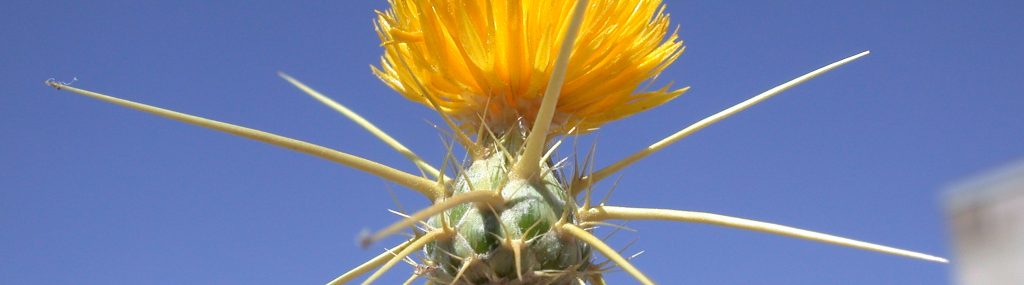
Photo: J. Caldwell / Utah Weed Control Association / utahweed.org
BACKGROUND
Introduced from Europe. Thrives on dry sites — roadsides, rangelands, and disturbed areas. Known to cause neurological “chewing disease” in horses that consume it.
HOW TO IDENTIFY
A 2–3 ft winter annual with blue-green foliage and distinctive cream-colored thorns (¼–¾ inch long) protruding from yellow flower heads. Rosette leaves resemble dandelion. Blooms in early summer.
CONTROL OPTIONS
Tillage is effective. Select herbicides provide fair to good control when applied between the rosette and bloom stages. Biocontrol agents exist but have limited availability.
Full profile at utahweed.org
Dalmatian Toadflax
Linaria dalmatica
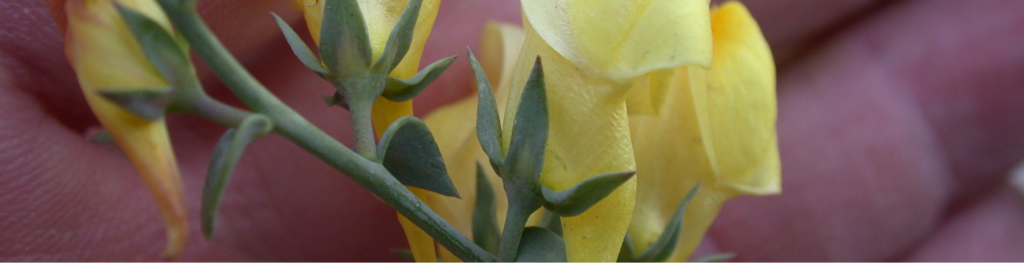
Photo: J. Caldwell / Utah Weed Control Association / utahweed.org
BACKGROUND
Originally imported from Europe as an ornamental plant. Now aggressively colonizes rangelands and roadsides, particularly on sandy soils. Spreads by both seed and rootstock, making it very persistent.
HOW TO IDENTIFY
A creeping perennial reaching 2–4 feet tall. Blue-green, waxy leaves clasp the stem. Produces yellow snapdragon-like flowers with white highlights from late spring through summer. Seeds develop in two-celled berry-like capsules.
CONTROL OPTIONS
Deep roots and waxy leaf surface make control challenging. Select herbicides offer good control when applied spring through fall. A biocontrol weevil (Mecinus janthiniformis) is available and provides fair results.
Full profile at utahweed.org
Dyer’s Woad
Isatis tinctoria
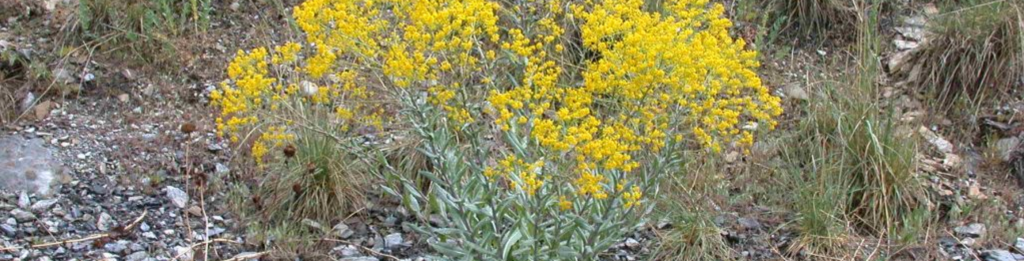
Photo: J. Caldwell / Utah Weed Control Association / utahweed.org
BACKGROUND
Originally imported from Europe as an ornamental plant. Now aggressively colonizes rangelands and roadsides, particularly on sandy soils. Spreads by both seed and rootstock, making it very persistent.
HOW TO IDENTIFY
A creeping perennial reaching 2–4 feet tall. Blue-green, waxy leaves clasp the stem. Produces yellow snapdragon-like flowers with white highlights from late spring through summer. Seeds develop in two-celled berry-like capsules.
CONTROL OPTIONS
Deep roots and waxy leaf surface make control challenging. Select herbicides offer good control when applied spring through fall. A biocontrol weevil (Mecinus janthiniformis) is available and provides fair results.
Full profile at utahweed.org
Canada Thistle
Cirsium arvense
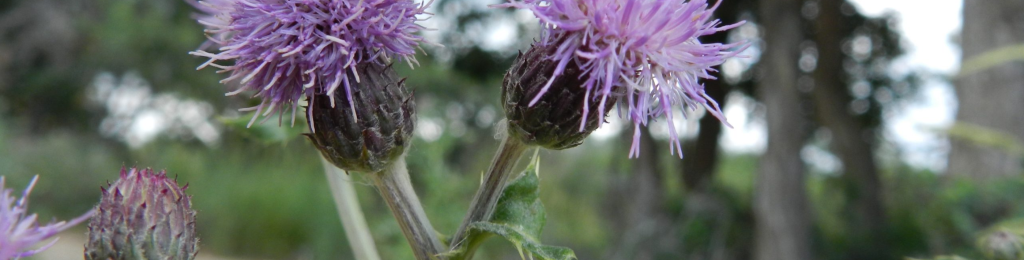
Photo: J. Caldwell / Utah Weed Control Association / utahweed.org
BACKGROUND
Native to southeastern Eurasia. Despite its name, it is not from Canada — the name arose because it spread into the U.S. via Canada. Highly adaptable to many habitat types; spreads aggressively via both seeds and creeping rootstock.
HOW TO IDENTIFY
A creeping perennial growing 1–4 feet tall in colonies ranging from sparse to very dense. Leaves have spiny-tipped lobes. Small (¾ inch) light pink to purple flower heads bloom in July and August, with softly spined bracts.
CONTROL OPTIONS
Herbicides provide good control on actively growing plants from spring through fall. Digging and tillage are generally ineffective due to the extensive root system. Several biocontrol agents are available with fair results.
Full profile at utahweed.org
Hoary Cress (Whitetop)
Cardaria draba · also known as Lepidium draba
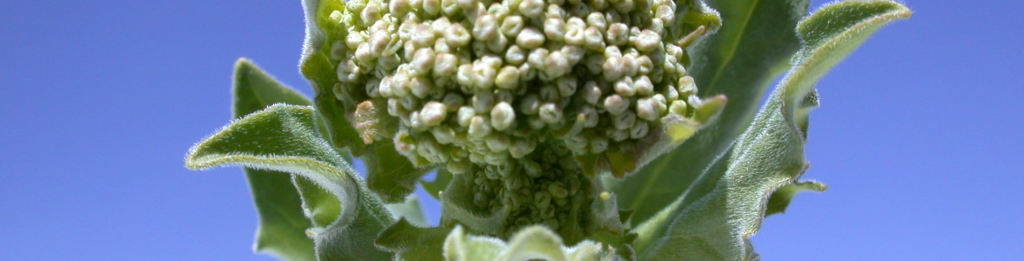
Photo: J. Caldwell / Utah Weed Control Association / utahweed.org
BACKGROUND
Originated in Europe; now widespread in Utah along roadsides, field edges, and disturbed soils. Particularly well-adapted to salty or slightly alkaline soils. Reproduces by both root segments and seed, making it very hard to eliminate.
HOW TO IDENTIFY
A perennial 1–2 feet tall with creeping rootstocks. Upper leaves clasp the stem. In late spring, it produces dense clusters of small white four-petaled flowers — creating a distinctive white carpet effect. Heart-shaped seed pods contain two brownish seeds each.
CONTROL OPTIONS
Select herbicides offer fair to good control when applied from the rosette stage through early bloom. Biocontrol research is still in early stages. Persistence with herbicide application over multiple seasons is typically required for meaningful reduction.
Full profile at utahweed.org
What Our Community Can Do
- Don’t disturb infested soil unnecessarily — many of these species spread via root fragments and seeds attached to equipment, shoes, and vehicle tires.
- Avoid mowing weeds in bloom — this can spread seeds. Report blooming infestations immediately.
- Support coordinated treatment. Individual spot-spraying without a coordinated plan can be counterproductive. The HOA is working to implement a systematic management approach.
- Consider your own landscaping. Native or drought-tolerant plantings in disturbed areas reduce the bare soil that invasive weeds prefer to colonize.
Questions? Contact the HOA board or property management. For county-level resources and Utah noxious weed reporting, visit the Utah Weed Control Association.